
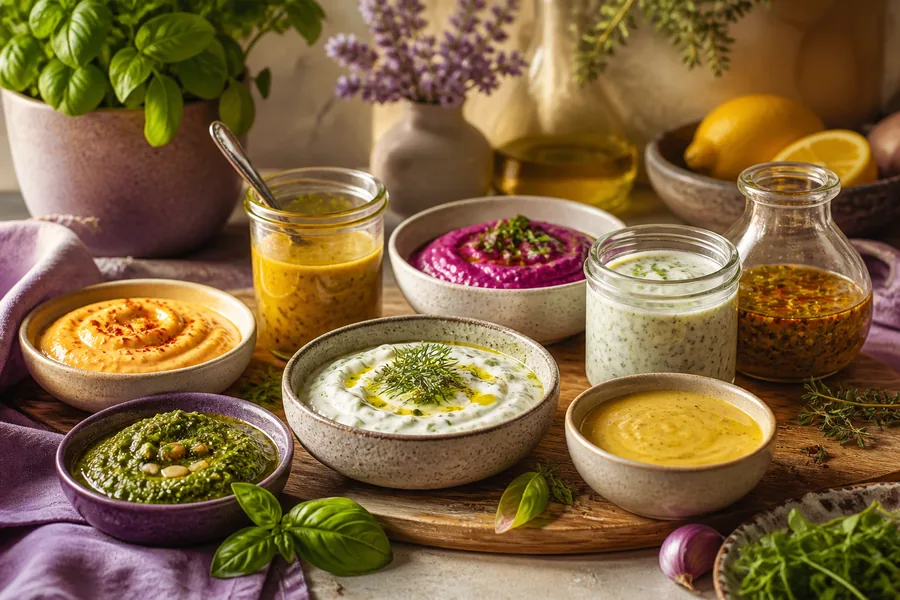
 Illustrative image—not a photograph of this dish. Be the first to upload a real one.
Garlic and Mustard Vinaigrette
Cookbook | Recipes | Ingredients | Equipment | Techniques | Cookbook Disambiguation Pages | Recipes | Salad Recipes
Source: Wikibooks contributors
Adapted: Imported and reformatted by HowManyCookies from the cited Wikibooks revision.
Source revision: Revision 4613379
License: CC BY-SA 4.0 · Wikibooks contributors
Ingredients
- 1 clove of garlic, smashed
- 2 tablespoons vinegar
- 1 teaspoon prepared mustard
- 6 tablespoons oil (vegetable, extra-virgin olive, almond, hazelnut, etc.)
- Salt to taste
- Freshly-ground pepper to taste
- Herbs to taste
Directions
- Mix garlic, salt, mustard, and vinegar until smooth.
- Add oil and mix until smooth.
- Add pepper and herbs to taste.
- Let stand; the longer the herbs and mustard soak in the oil, the better-blended the flavor will be. You may need to quickly remix the vinaigrette just before dressing the salad if the oil and vinegar have separated while standing.
Notes
The classical ratio of vinegar to oil is 1:3. Some recipes, however, suggest a ratio as low as 1:5.
It is important to mix the mustard and vinegar first, then add the oil. This helps the emulsion hold better, resulting in a smooth vinaigrette that is slow to separate out. Adding the oil in a stream and mixing as it is added helps even more.
Use a pleasantly-flavored vinegar such as balsamic vinegar or red wine vinegar.
Mustard powder may be used instead of regular prepared mustard.
Instead of the garlic, a similar amount of very finely diced shallot may be used.
Toss the dressing with a salad just before serving. Greens that have been dressed wilt and become unappetizing within a few minutes.
Different oils can be used for different flavors. Some suggest the use of vegetable oil, but this tends to add little in the way of flavor and most would find it unsuitable. Extra-virgin olive oil is always a good choice, but nearly any plant oil can be used, and experimentation is always good.