
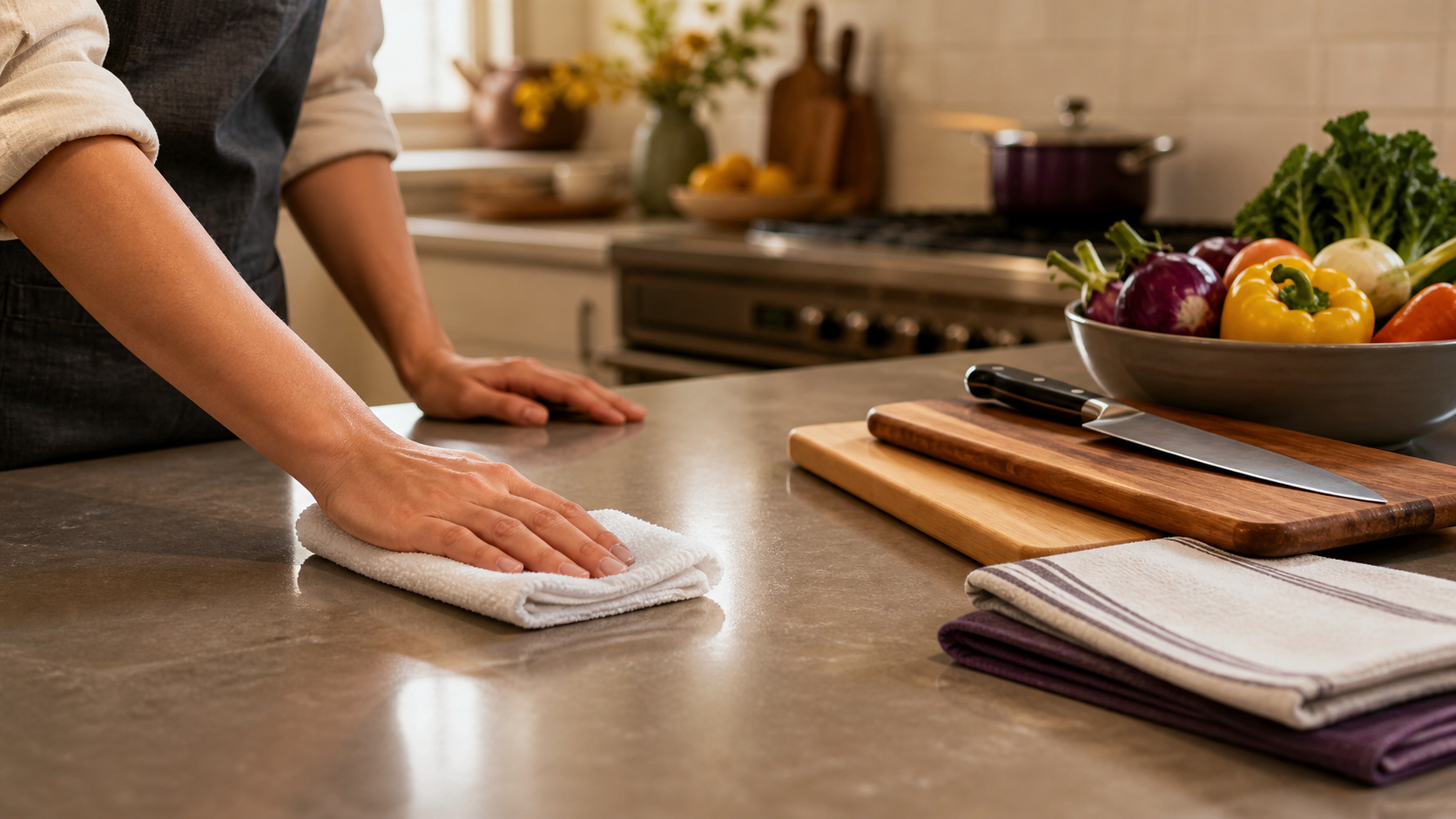
A clean work area is not just about making the kitchen look good. It is part of the recipe. The condition of your counter, cutting boards, tools, towels, and hands can affect the safety, flavor, and flow of everything you make.
Clean and sanitized are not the same thing
Cleaning removes crumbs, grease, dried food, and other residue. It also removes some germs, but that is not its whole job.
Sanitizing comes after cleaning. A sanitizer is used to reduce harmful microorganisms on an already-clean food-contact surface. Grease and dried food can keep sanitizer from reaching the surface properly, so spraying something on a dirty counter does not skip the cleaning step.
That order matters: clear, wash, rinse, sanitize, and air-dry.
What a clean station protects
- The people you feed. Germs can move from hands, raw ingredients, tools, and surfaces into food. Clean habits reduce those opportunities.
- Food from cross-contamination. Raw meat, poultry, seafood, eggs, and their juices need to stay away from ready-to-eat ingredients and the tools used for them.
- People with food allergies. A quick wipe is not always enough. Full cleaning helps remove allergen residue and reduces the chance of it being transferred to another food.
- Flavor and quality. Yesterday's onion, raw flour, grease, or cleaning residue does not belong in today's cookies.
- Your attention. An organized station makes it easier to see what is ready, what is dirty, and what needs to happen next.
Crumbs and residue can also attract pests and give unwanted microorganisms places to hang around. A clean kitchen is easier to inspect, easier to maintain, and much nicer to walk into for the next meal.
A simple routine that works
1. Clear and scrape. Move food, tools, and loose debris out of the cleaning area. Do not clean around ingredients that are still exposed.
2. Wash. Use hot, soapy water and a clean cloth or scrubber that is appropriate for the surface.
3. Rinse. Remove loosened soil and soap so the sanitizer can reach the surface.
4. Sanitize. Use a product approved for food-contact surfaces. Follow its label for mixing, contact time, and whether a final rinse is required.
5. Air-dry. Give the surface time to dry instead of immediately wiping it with a towel that may put contamination back.
If a towel or cloth touches raw juices or becomes visibly dirty, change it. Moving the same dirty cloth from the cutting board to the counter is not cleaning; it is giving the mess a tour of the kitchen.
A word about cleaning products
Never mix cleaning products. More chemical is not automatically more effective, and an extra-strong mixture can create fumes, leave unwanted residue, or damage the surface you are trying to protect.
Read the label, use the product for its intended surface, measure it correctly, and give it the required contact time. If the label says to rinse afterward, rinse. The instructions are part of the process.
Start clean. Work clean. Finish clean.
- Start clean: Clear the station, gather clean tools, and wash your hands with soap and water for at least 20 seconds.
- Work clean: Keep raw animal foods separate from ready-to-eat ingredients, clean between tasks, and replace dirty towels or utensils instead of reusing them.
- Finish clean: Put food away promptly, then wash, rinse, sanitize, and air-dry the food-contact surfaces and tools you used.
Once clean-as-you-go becomes a habit, it does not slow you down. It removes little decisions, keeps the next step visible, and makes mistakes easier to catch. That is true on a restaurant line, and it is just as true in a home kitchen.
The first ingredient
A clean station will not make a recipe perfect, but it gives the recipe a fair chance. It protects the food, the cook, and everyone waiting at the table. That is why I consider a properly clean and sanitized work area the first ingredient in anything worth cooking.
Next in Clean, Safe, Ready
Next time, we will look at the places cross-contamination likes to hide: the handles, faucets, towels, phones, containers, and other things our hands touch without thinking.
Food-safety references
- CDC: Preventing Food Poisoning
- USDA: Washing Food — Does It Promote Food Safety?
- FDA: Allergen Removal and Transfer Using Wiping and Cleaning Methods
Cover image: AI-generated editorial image.